How to Start Affiliate Marketing for Beginners: A Complete Step‑by‑Step Guide
- 16 min Read
- Beginner Freindly
- Checked by Chris Stone
If you’ve ever wondered whether it’s really possible to make money online without creating your own product, dealing with customer support, or holding inventory, affiliate marketing might be exactly what you’re looking for. I remember the first time I heard about it — it sounded almost too simple. Share a link, someone buys, you get paid. But of course, like anything worth doing, there’s a right way and a wrong way to start.
This guide is written for you if you’re a total beginner. No fancy jargon. No unrealistic promises. Just real, practical advice explained in a friendly, easy‑to‑understand way. By the end of this article, you’ll understand how to start affiliate marketing for beginners, how it actually works behind the scenes, and how you can build something that lasts — even if you’re starting with zero experience.
What Is Affiliate Marketing? (In Simple Words)
Let’s start at the very beginning.
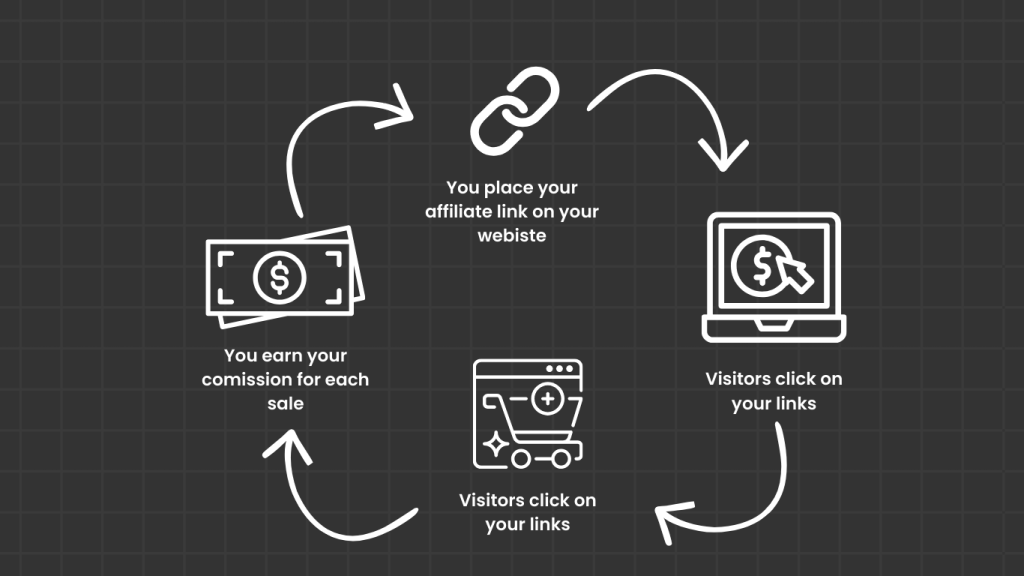
Affiliate marketing is when you promote someone else’s product or service and earn a commission when a sale is made through your unique link. You don’t create the product. You don’t ship anything. You don’t handle refunds or customer emails. Your job is simply to connect the right product with the right person.
Think of it like recommending a movie to a friend. If your friend trusts your taste, they’ll watch it. Now imagine getting paid every time someone followed your recommendation. That’s affiliate marketing.
Behind the scenes, companies use affiliate programs to reward people who help bring them customers. You sign up, get a tracking link, and every time someone purchases through that link, you earn a percentage of the sale.
Affiliate marketing works because it’s a win‑win. Businesses get more sales, and affiliates earn money for sharing helpful recommendations.
Why Affiliate Marketing Is Perfect for Beginners
One of the biggest reasons affiliate marketing is so popular is because the barrier to entry is low. You don’t need a huge budget. You don’t need technical skills. You don’t need to be an expert — you just need to be willing to learn and stay consistent.
Here’s why so many beginners choose this path:
You can start with little to no money
You don’t need to create or own a product
You can work from anywhere
It’s scalable (your income isn’t tied to hours worked)
You can build it alongside a job or school
Most importantly, affiliate marketing allows beginners to focus on one main skill: helping people make better buying decisions. When you approach it from that angle, everything becomes much easier.
How Affiliate Marketing Actually Works (Step by Step)
To really understand how to start affiliate marketing for beginners, you need to see the full picture. The process is simple, but each step matters.
First, you choose a niche. This is the general topic you’ll focus on, such as beauty, fitness, pets, personal finance, or making money online.
Next, you join affiliate programs related to that niche. These programs give you special tracking links.
Then, you create content — blog posts, videos, social media posts, emails — that naturally includes your affiliate links.
When someone clicks your link and makes a purchase, the company tracks it and pays you a commission.
That’s it. No complicated systems. No hidden steps. The magic happens when you repeat this process consistently and improve over time.
Choosing the Right Niche (This Step Matters More Than You Think)
Most beginners rush this step, and honestly, that’s where many affiliate marketing journeys quietly fail before they even get a chance to work.
When you’re learning how to start affiliate marketing for beginners, your niche is the foundation of everything you build. It influences the content you create, the products you promote, the audience you attract, and even how motivated you stay months down the line. Choosing the wrong niche can make affiliate marketing feel frustrating and exhausting. Choosing the right one can make everything feel clearer and more natural.
A niche is simply the main topic or category your content will focus on. But not all niches are created equal. The best niches usually sit at the intersection of three key factors: interest, demand, and profitability.
First, there’s interest. You don’t need to be obsessed with your niche or know everything about it from day one. However, you do need to find it interesting enough to talk about consistently. Affiliate marketing isn’t a one-post-and-done strategy. You’ll be creating content over time, answering questions, and staying up to date. If you completely dislike the topic, it will start to feel like a chore, and most people quit at that point.
Next is demand. This is where many beginners make a critical mistake. A niche can be interesting, but if no one is actively searching for information or solutions related to it, it will be very hard to make money. Demand means people are already asking questions, watching videos, reading blogs, and searching on Google. A simple way to check this is to look at search results, YouTube videos, or social media content in that niche. If you see consistent activity, that’s a good sign.
Finally, there’s profitability. A niche must have products or services that people are willing to spend money on. Affiliate marketing relies on purchases, so if there’s nothing to promote — or if the products are extremely low-priced — earning commissions becomes difficult. Profitable niches usually include physical products, digital tools, subscriptions, courses, or services that solve real problems.
Some beginner-friendly affiliate marketing niches that consistently perform well include:
Health and wellness, where people invest in feeling better and improving their quality of life
Beauty and skincare, which has repeat buyers and strong brand loyalty
Pets, because pet owners are passionate and willing to spend money on their animals
Personal finance, where people look for ways to save, invest, and earn more
Online education, including courses, tools, and learning platforms
Technology and software, especially apps and subscription-based tools
Lifestyle and self-improvement, which covers habits, productivity, and personal growth
These niches work well for beginners because they have large audiences, ongoing demand, and a wide range of affiliate products available.
If you’re ever unsure, here’s a simple rule to remember: follow the money, but don’t ignore your interest. If people are already spending money in a niche, that’s usually a strong indicator that affiliate marketing opportunities exist. Your goal isn’t to reinvent the wheel — it’s to step into a market that’s already working and position yourself as a helpful guide.
Take your time with this step. A well-chosen niche makes learning affiliate marketing easier, more enjoyable, and far more profitable in the long run.
Finding Affiliate Programs to Join
Once you’ve chosen your niche, the next step is finding affiliate programs you can actually earn from. This is where your content connects to income, so it’s worth taking a little time to understand how affiliate programs work and which ones are best for beginners.
At its core, an affiliate program is a partnership between you and a company. You help promote their product, and in return, they pay you a commission when a sale is made through your link. The key is choosing programs that align with your niche and genuinely help your audience.
There are two main types of affiliate programs you’ll come across.
The first type is affiliate networks. These are platforms that host thousands of products from many different companies, all in one place. Affiliate networks make it easy for beginners to get started because you can apply once and access multiple offers. Some popular and beginner-friendly affiliate networks include Amazon Associates, ShareASale, ClickBank, and CJ Affiliate.
Amazon Associates is especially popular for beginners because almost everyone already trusts Amazon, and there are products available in nearly every niche. While the commission rates are lower, conversions tend to be higher because people are comfortable buying there. Other networks, like ShareASale and CJ Affiliate, often offer higher commissions and work well once you gain more experience.
The second type is direct affiliate programs. These are run by individual brands rather than a network. You’ll often find these in niches like software, beauty, fitness, and online education. Many tools, apps, and course creators offer generous commissions because they value long-term customers. To find these programs, a simple search like “brand name + affiliate program” or “brand name + partners” usually works.
When deciding which affiliate programs to join, it’s important to look beyond just how much they pay. Several factors can make a big difference in your results.
Commission rates matter, but higher isn’t always better if the product doesn’t convert well. Cookie duration is another important detail — this determines how long you’ll receive credit after someone clicks your link. A longer cookie gives you more chances to earn a commission. Product quality is critical, because promoting low-quality products can damage your trust and credibility. Brand reputation also plays a big role, especially for beginners who are still building an audience.
As a beginner, it’s usually best to start with well-known platforms and products you would honestly recommend to a friend. When you believe in what you’re promoting, your content sounds more natural, your audience trusts you more, and your affiliate marketing efforts feel far less forced.
Remember, affiliate marketing isn’t about promoting everything — it’s about promoting the right things. Choosing solid affiliate programs early on makes the rest of your journey much smoother and more profitable.
Building a Platform (Where Your Affiliate Links Will Live)
Now let’s talk about where all of this actually happens, because affiliate marketing needs a home. Your content and affiliate links need a place where people can find them, trust them, and come back to them.
You need a platform to share your content and affiliate links. This could be a blog, a YouTube channel, social media accounts, an email list, or a combination of these. Each option has its strengths, and the best choice depends on your goals and how you prefer to create content.
For beginners, there are two very common paths.
The first path is starting a website or blog, and this is often the smartest long-term decision. A blog allows you to create in-depth content that can rank on Google and bring in traffic consistently over time. Unlike social media posts that disappear quickly, blog posts can generate affiliate income for months or even years after they’re published. A website also helps you build authority and trust, which is essential when recommending products.
Starting a blog is easier than most beginners think. Hosting platforms like Hostinger make it simple and affordable to get online, even with no technical experience. With Hostinger, you can set up a domain, install WordPress in just a few clicks, and start publishing content the same day. This gives you full control over your website, your content, and your affiliate links — something you don’t get on social media platforms.
The second path is using social media platforms such as TikTok, Instagram, Pinterest, or YouTube Shorts. These platforms are excellent for beginners who want faster visibility and growth. You don’t need to worry about website setup, and you can start sharing content immediately. Short-form content, especially, allows you to reach large audiences quickly and test what topics people respond to.
However, social media alone can be unpredictable. Algorithms change, accounts get limited, and posts have a short lifespan. That’s why many successful affiliate marketers use social media mainly as a traffic source rather than their entire business.
The most effective strategy — and the one many professionals eventually use — is combining both approaches. Social media helps you attract attention and drive traffic, while your blog and email list act as your long-term assets. You can direct followers to helpful blog posts, guides, or reviews where your affiliate links live permanently.
When you build a platform you control, especially a blog hosted on a reliable service like Hostinger, you’re not just promoting links — you’re building an online business. And that’s what allows affiliate marketing to grow into a stable and scalable income stream over time.

Creating Content That Actually Converts
This is the point where most beginners get stuck, and it’s also where affiliate marketing either starts working or quietly fails. Many people believe affiliate marketing is about placing links everywhere and hoping someone clicks. In reality, that approach rarely leads to consistent results and often pushes people away.
Affiliate marketing works best when your content is genuinely helpful and created with the reader in mind. People are not searching online because they want to see ads — they’re looking for answers, guidance, and reassurance. When your content focuses on solving problems rather than selling, your affiliate links naturally become part of the solution.
Instead of saying, “Buy this product,” strong affiliate content explains why the product exists, who it’s designed for, and how it helps solve a specific problem. This is where storytelling becomes powerful. You might describe a common struggle beginners face, a mistake many people make, or a situation your audience can relate to. When readers feel like you understand their problem, trust begins to form.
Sharing experiences — whether personal or observed — also adds credibility. You don’t need to claim perfection or overnight success. In fact, honesty works better. Explaining what worked, what didn’t, and what you learned along the way helps readers feel confident in your recommendations. Education builds confidence, and confidence leads to action.
Some content formats tend to work especially well for affiliate marketing because they naturally guide readers toward solutions:
How-to guides that walk readers step by step through a process
Beginner tutorials that simplify complex topics
Honest product reviews that focus on real benefits and limitations
Comparison articles that help readers choose between similar options
Problem-solution content that addresses a specific pain point
These types of content don’t feel pushy or sales-driven. Instead, they help readers make informed decisions. When someone finishes reading your content feeling clearer, more confident, and supported, clicking your affiliate link becomes a logical next step — not a forced decision.
Over time, this approach also builds something far more valuable than quick clicks: trust. And in affiliate marketing, trust is what turns content into consistent conversions and long-term income.
The Importance of Trust (Your Real Asset)
If there’s one thing you should remember while learning how to start affiliate marketing for beginners, it’s this: trust is everything.
People don’t buy because of links. They buy because of confidence.
Be honest about what a product can and cannot do. Avoid overhyping. Share pros and cons. Speak like a real human, not a salesperson.
The more trust you build, the easier affiliate marketing becomes. Over time, your audience will come to you specifically for recommendations — and that’s when your income becomes consistent.
Understanding SEO (Without Getting Overwhelmed)
Search engine optimization, or SEO, is one of the most powerful tools in affiliate marketing, especially for beginners who want long-term, passive traffic. While SEO can sound technical at first, the core idea is actually very simple.
SEO means optimizing your content so it appears when people search for information on Google and other search engines. Instead of constantly chasing views on social media, SEO allows your content to work for you in the background. When done correctly, a single blog post can bring in visitors — and affiliate commissions — for months or even years after it’s published.
The key to SEO is understanding search intent. People go to Google because they have a problem, a question, or a goal. Your job is to create content that clearly answers that need. For example, your main keyword for this article — how to start affiliate marketing for beginners — is a perfect example of strong search intent. Anyone typing that into Google is actively looking for guidance, not entertainment.
SEO works best when your content is genuinely helpful and easy to understand. You don’t need to stuff keywords everywhere or write for robots. In fact, modern SEO rewards content that feels natural, human, and informative.
To optimize your content effectively, focus on a few simple fundamentals. Use your main keyword naturally in your title, headings, and introduction so search engines understand what your article is about. Include related and supporting keywords throughout the article to give more context. Write long, in-depth content that fully covers the topic instead of shallow posts that leave questions unanswered. Most importantly, focus on answering real questions beginners are actually asking.
One of the biggest advantages of SEO is that it compounds over time. You may not see immediate traffic in the first few weeks, and that’s completely normal. But as your content ages and gains trust with search engines, it can steadily climb in rankings. That’s when affiliate marketing becomes more predictable and less dependent on daily posting.
Think of SEO as planting seeds. You won’t see results overnight, but once they start growing, they continue to work for you long after the initial effort. For beginners learning affiliate marketing, mastering basic SEO is one of the smartest long-term moves you can make.
Common Mistakes Beginners Should Avoid
Almost everyone makes mistakes when starting affiliate marketing. The goal is to avoid the most damaging ones.
One common mistake is trying to promote too many products at once. This leads to confusion and weak messaging.
Another mistake is choosing products only because of high commissions, without caring about quality.
Some beginners also quit too early. Affiliate marketing is not instant money. It’s a system that grows over time.
Stay focused. Stay consistent. Improvement comes faster than you think.
How Long Does It Take to Make Money With Affiliate Marketing?
This is one of the most honest questions beginners ask.
The truth is, affiliate marketing is not a get‑rich‑quick model. Some people make their first commission within weeks. Others take months. It depends on effort, strategy, and consistency.
What matters most is building skills and assets. Every piece of content you create is an investment. Over time, those investments add up.
If you treat affiliate marketing like a real business, it can eventually replace — or exceed — traditional income.
A Realistic Beginner Action Plan
If you’re feeling overwhelmed, take a deep breath — that feeling is completely normal. Affiliate marketing can seem like a lot at first because there are many moving parts, but the truth is you don’t need to do everything at once. Trying to learn and implement everything simultaneously is one of the fastest ways to burn out.
The most successful beginners start simple and build gradually. Instead of chasing every strategy or platform, focus on creating a solid foundation. Choose one niche you can commit to learning about. Pick one main platform where you’ll share your content, whether that’s a blog, social media, or both. Join one or two affiliate programs that align with your niche and offer products you genuinely believe in.
Consistency matters far more than speed. Creating helpful content on a regular basis, even if it’s just a few pieces a week, is far more effective than posting sporadically and losing momentum. Each piece of content you create helps you improve your skills, understand your audience better, and build confidence.
It’s also important to focus on learning rather than perfection. Your first blog post, video, or social media post doesn’t need to be perfect — it just needs to exist. Every successful affiliate marketer started exactly where you are now, with questions, doubts, and imperfect content. What set them apart was the willingness to keep going, learn from mistakes, and improve over time.
Affiliate marketing rewards patience and persistence. When you take small, consistent steps and stay focused on helping people, progress becomes inevitable. Start where you are, use what you have, and trust that clarity comes through action.
Final Thoughts: Your Affiliate Marketing Journey Starts Now
Learning how to start affiliate marketing for beginners is less about technical skills and more about mindset. You’re learning how to communicate, educate, and help people make decisions.
If you stay patient, focus on value, and commit to showing up even when results are slow, affiliate marketing can become one of the most rewarding online income paths available.
You don’t need to be an expert. You just need to start.
And once you do, you’ll realize that this journey isn’t just about earning commissions — it’s about building freedom, confidence, and a skill set that pays you back for years to come.